Tactical Patches for Gear That Pull Weight
A blank plate carrier, range bag, or pack says one thing - unfinished. Tactical patches for gear are how you mark your setup with purpose, attitude, and a little bit of warning for anybody paying attention. They are not just there to make nylon look less naked. The right patch tells people who you are, what you stand for, and sometimes what kind of sense of humor you bring to the fight.
That matters more than people outside this world realize. In tactical culture, details count. The patch on your bag at the range, the med identifier on your kit, the flag on your carrier, or the morale patch on your truck visor all say something before you ever open your mouth. Good gear gets used hard. Good patches should do the same.
What tactical patches for gear actually do
There are two lanes here, and pretending they are the same is where people make dumb choices. One lane is function. The other is identity.
Functional patches help with recognition, organization, and access. Think blood type, med, IR identifiers, unit-style markers, call signs, or role labels. On a real kit setup, that stuff can matter fast. Even for civilian range use, a clear med patch or identifier patch can make your gear easier to sort and easier for others to read.
Identity patches are the tribe markers. Flags, slogans, veteran references, pro-2A statements, dark humor, skull graphics, and straight-up attitude. These are the patches that make your gear yours. They signal where you come from, what you believe, and whether you're the kind of person who thinks "subtle" is overrated.
Neither use is wrong. But they serve different jobs. If you stack your setup with joke patches and no useful identifiers, that may be fine for a truck bag or range backpack. If you are putting together a working loadout, function should come first. It depends on where the gear is going and why.
Not every patch belongs on every setup
This is where common sense needs to beat ego. A morale patch that kills on a range bag may be a terrible call on duty gear. A giant embroidered statement piece may look great on the back of a pack, but it can snag, peel, or wear out fast if the bag gets thrown in and out of vehicles all week.
There is also the issue of noise. Too many patches make good gear look like a rolling flea market. One or two strong choices usually hit harder than covering every inch of loop panel you can find. Tactical style works best when it still looks squared away.
If your setup is for daily use, training, or hard travel, keep it lean. If it is more of a personal expression piece, you have more room to get loud. There is no single rulebook here, but there is a difference between intentional and cluttered.
How to choose tactical patches for gear without buying junk
The fastest way to waste money is buying patches that only look good in product photos. A patch can have a killer design and still be trash once it hits real use.
Start with material. PVC patches usually take abuse better than basic embroidery when mud, rain, sweat, and rough handling enter the picture. They wipe clean, hold detail well, and tend to keep their shape. Embroidered patches have a classic look and more texture, but cheaper ones fuzz up, fray, and lose edge definition over time. If the gear is going to live outdoors or get beat up in the truck, PVC usually wins.
Backing matters too. Hook backing should be stitched clean and hold tight without lifting at the corners. Weak hook material turns into a constant annoyance, especially on bags and carriers that get dragged around. You should not need to baby a patch just to keep it attached.
Size is another place people get sloppy. A huge patch on a small admin pouch looks ridiculous, and a tiny patch on a broad panel disappears. Match the patch to the space. Think about visibility, balance, and whether you still need room for actual identifiers.
Then there is legibility. A patch loaded with tiny text, overbuilt artwork, or muddy colors may sound cool but read like a mess from three feet away. Simple usually hits harder. Strong contrast, clean lines, and a design you can recognize fast beat overcomplicated artwork every time.
The best places to run patches
Patches make the most sense where they can be seen and where they do not interfere with the job of the gear. Range bags are probably the easiest win. They have enough real estate, they travel with you, and they are already part utility and part personality. A good patch on a range bag tells people what camp you're in before the zipper even opens.
Backpacks and tactical packs are another solid choice. They are practical for ID, especially if multiple people are hauling similar bags, and they give you room for a flag, morale patch, or blood type marker without making the setup look crowded.
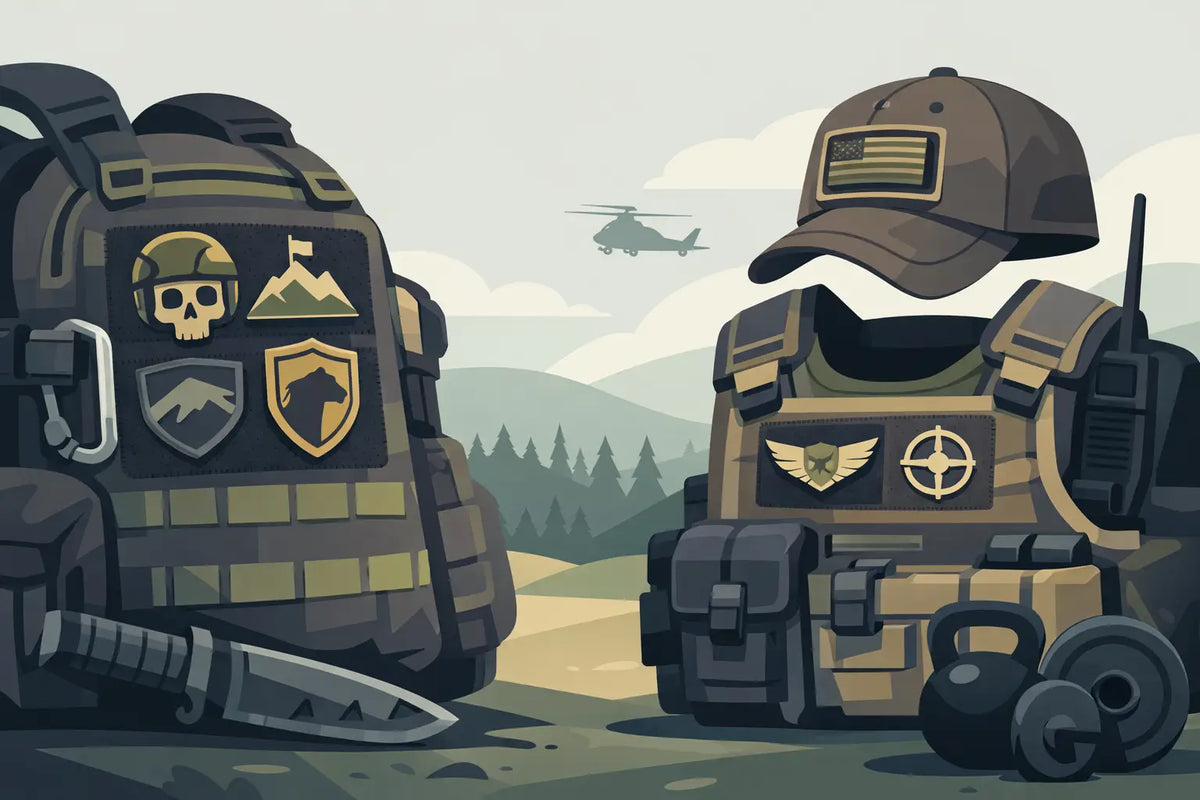
Plate carriers and chest rigs need more discipline. If the gear has a real-world role, keep patches purposeful. Identification, med markers, and low-profile flags make sense. Turning working gear into a rolling joke board usually does not.
Headliners, visors, jackets, and hats fall more into the lifestyle lane. That is where morale patches can breathe a little. If the patch is about humor, patriotism, or making a statement, casual carry gear is often the better home for it.
Patch styles that actually connect with this crowd
A lot of tactical gear trends come and go, but a few patch categories stay strong because they speak the language of the people buying them.
Flags are always in the fight. Full color, subdued, blacked-out, reverse orientation - there is a reason they never leave the lineup. They are clean, direct, and impossible to misread.
Veteran and service references carry weight when they are done right. Marine, Army, law enforcement, first responder, and old-school unit-style themes hit because they come from real identity, not pretend dress-up. That authenticity matters.
Then there are morale patches with teeth. Some are funny. Some are profane. Some are pure warning label. The good ones land because they feel like something your people would actually say. Forced edgy designs fall flat fast. Real attitude does not need to try that hard.
Second Amendment themes also stay strong because they are not just decoration in this world. They are a values signal. Same goes for faith-and-country designs when they are done with conviction instead of cheap theatrics.
That is the difference between a patch people notice and one they forget. The best ones feel earned.
Durability matters more than hype
If a patch starts peeling after one hot summer or the design cracks up after a couple muddy range days, it was never worth the money. Hard-use gear needs hard-use accessories. Period.
Look for clean edges, solid molding or stitching, and hook backing that feels like it means business. Good patches should survive getting thrown in the truck, stuck to dusty panels, yanked off, slapped back on, and run through bad weather without turning into curled-up junk.
This is one of those places where cheap usually shows itself fast. You can save a few bucks up front, but if the patch dies early, that was not savings. That was buying twice.
For a brand like American Spartan Apparel, that standard matters. The people wearing this stuff are not looking for soft lifestyle cosplay. They want gear and add-ons that can keep up with how they actually live.
Build a setup that says something real
There is a fine line between personal and performative. Tactical patches work best when they reflect your actual life, your actual values, or your actual sense of humor. You do not need to fake a background, stack clichés, or cover every loop panel like you are trying to win a contest.
A single flag patch, one clean morale patch, and one useful identifier can say more than ten random designs bought late at night because they looked cool on a screen. The point is not volume. The point is signal.
Your gear should feel like yours the same way a rifle setup, truck interior, or daily carry bag feels like yours. Dialed in. Intentional. Built around how you move. A patch is a small thing, but people in this world know small things are usually where standards show up.
Pick patches that hold up. Pick designs that mean something. And if a patch goes on your gear, make sure it earned the spot.