Article: What Is a Morale Patch?
What Is a Morale Patch?
You have probably seen one on a plate carrier, range bag, ball cap, or headliner panel and thought, what is a morale patch exactly? Fair question. At a glance, it looks like a small piece of fabric with a funny slogan, a flag, a skull, or some inside joke only a few people get. But in military and tactical culture, a morale patch is more than decoration. It is identity, attitude, humor, and unit culture stitched into one small square.
That is why morale patches have stuck around. They say something fast. Sometimes that message is serious. Sometimes it is hilarious. Sometimes it is pure sarcasm built for people who have been cold, tired, under pressure, and still found a way to laugh anyway.
What is a morale patch in plain English?
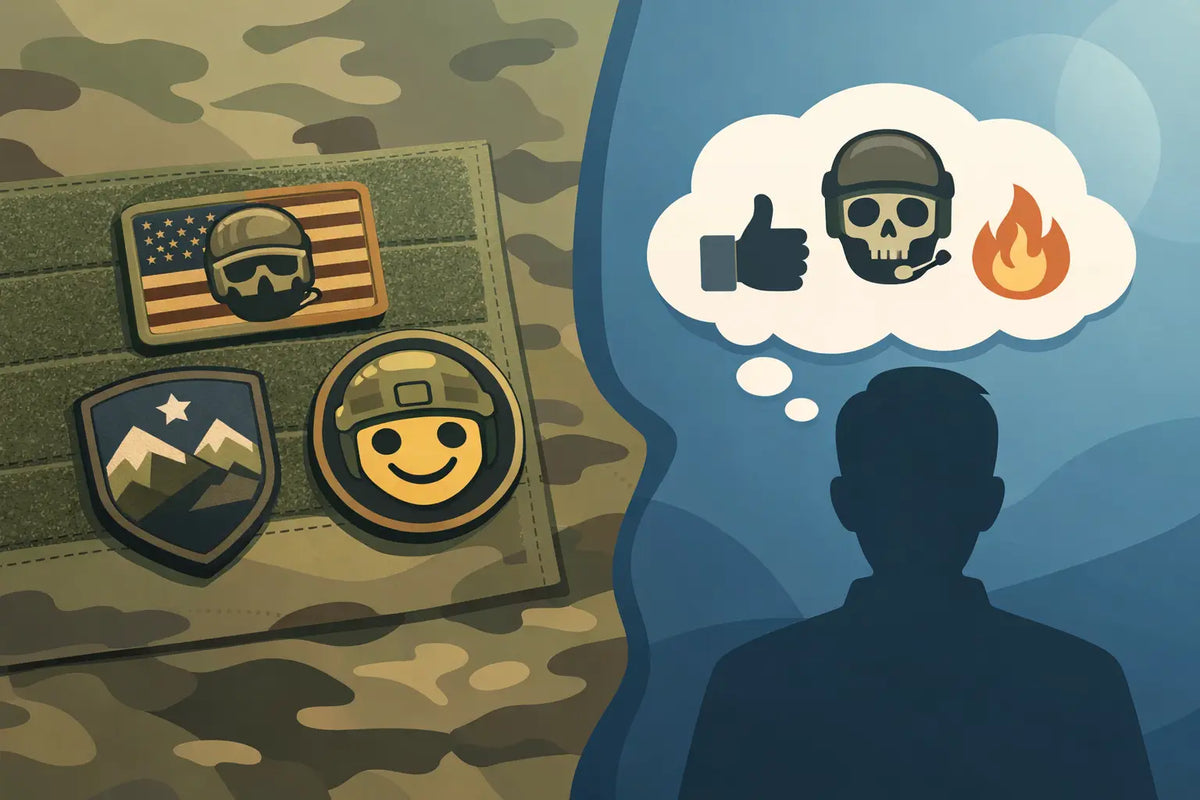
A morale patch is a removable patch, usually backed with hook-and-loop, worn on gear or clothing to show personality, unit pride, humor, beliefs, or affiliation. It is not usually an official rank or name tape. It is the stuff people choose to wear because it says something about who they are, what they have done, or what tribe they belong to.
Think of it as a calling card for the tactical crowd. It can be patriotic, funny, aggressive, motivational, or darkly sarcastic. A morale patch might carry a blood type joke, a flag, a Spartan helmet, a skull, a rifle graphic, or a phrase only veterans, cops, or range regulars instantly understand.
That freedom is the whole point. Official patches tell you what job a person has. Morale patches tell you what kind of person they are.
Where morale patches came from
The roots go back to military tradition. Service members have always found ways to personalize gear and build unit identity, even inside rigid structures. During wartime, especially in modern eras, unofficial insignia, cartoons, slogans, and custom art became a way to keep spirits up and build camaraderie. That is where the name comes from. They were about morale.
When you are operating in miserable conditions, humor matters. So does belonging. A patch that makes your team laugh, reminds everyone who they are, or throws a little attitude into a rough day can do more than people outside the culture realize.
Over time, morale patches moved beyond active-duty circles. Veterans brought them home. Law enforcement adopted them. The gun community picked them up fast. Then they spread into hunting, overlanding, airsoft, preparedness, and everyday carry culture. Now you will see them on backpacks, jackets, vehicle visors, and garage walls right alongside rifles, tools, and old challenge coins.
Why people wear morale patches
The short answer is because they mean something. But what they mean depends on the person and the patch.
For some people, a morale patch is about pride. It might represent military service, a law enforcement background, a branch of service, a deployment, or a simple love of country. For others, it is about humor. Tactical culture has always had a streak of hard-edged comedy because humor takes the edge off hard jobs.
There is also the tribe factor. A morale patch can signal that you are part of a certain community without saying a word. That matters in spaces where identity is tied to values like loyalty, freedom, sacrifice, grit, and competence. If you know, you know.
That said, not every patch carries deep meaning. Some are worn because they look cool. Some are collector items. Some are just there to get a laugh at the range. There is no rule saying every patch has to come with a war story.
What makes a patch a morale patch?
Not every patch is a morale patch. A name tape is functional. A rank patch is official. A department patch is identification. A morale patch is elective.
That is the key difference.
Most morale patches have a few things in common. They are usually small, easy to attach and remove, and designed for bags, hats, plate carriers, jackets, or admin panels. Most use hook-and-loop backing, though some are woven, embroidered, or made from PVC rubber.
The design is usually the main event. That can be a flag, slogan, cartoon, symbol, or icon that carries a message beyond simple identification. If it is there to boost spirit, show identity, or make a statement, you are probably looking at a morale patch.
The different styles you will see
Some morale patches are clean and straightforward. Think subdued American flags, Spartan imagery, crossed rifles, or branch-inspired designs. Those are about pride and identity.
Others lean into humor. Black coffee, bad attitudes, dark jokes, sarcastic one-liners, and the kind of comedy that makes civilians raise an eyebrow. That style is common because military and LEO humor tends to be blunt, not polished.
Then there are the loud statement patches. Second Amendment themes, patriotic slogans, anti-tyranny messaging, old-school Americana, or hard-use mindsets all show up here. These are less about subtlety and more about making sure nobody mistakes where you stand.
Finally, there are collectible patches. Limited runs, collabs, event patches, and custom drops have built a serious collector scene. Some people trade them the way others trade coins or stickers. In that crowd, rarity matters almost as much as design.
Where morale patches are worn
The usual homes are plate carriers, chest rigs, packs, range bags, jackets, hats, and hoodies with loop panels. Vehicle organizers, gun cases, and shop walls are common too. If it has a loop field, somebody is going to slap a patch on it.
Where you wear one depends on context. On range gear, almost anything goes. On duty gear, department rules matter. In uniform, command policy matters. That is where some people get confused.
A morale patch is not automatically approved just because it exists. In some units or agencies, unofficial patches are tolerated in certain places. In others, they are banned. Some commands allow them in garrison but not on operations. Some leaders are cool with funny patches until the joke gets too stupid or too political.
So yes, morale patches are common, but no, they are not a free-for-all in every setting. Read the room. Better yet, read the policy.
Why morale patches matter more than outsiders think
To somebody outside the culture, it can look like a sticker for grown men. That misses the point.
Symbols matter in tight communities. Shared jokes matter. Little signals of belonging matter. In high-stress jobs, morale is not some soft concept. It is a real thing tied to trust, resilience, and team culture. A patch is a small object, but it can carry a lot of that weight.
It also gives people a way to show individuality inside cultures that often require conformity. That balance is part of the appeal. You can respect the standards and still show a little personality.
There is also memory attached to these things. A patch from a deployment, a training cycle, a unit event, or a friend you served with can hit harder than a lot of bigger, flashier gear. People keep them because they mark time, place, and brotherhood.
Are morale patches just for military people?
No. That ship sailed a long time ago.
Veterans, cops, first responders, shooters, outdoorsmen, and patriotic civilians all wear morale patches now. If you are part of a culture that values preparedness, freedom, service, humor, or tactical gear, patches fit naturally.
That does not mean every patch carries the same weight. A combat veteran wearing a patch tied to his unit is not the same thing as somebody wearing a funny range patch on a weekend backpack. Both can exist, but they are not identical.
That is where a little respect goes a long way. If a patch references a branch, unit, or experience you did not earn, maybe do not wear it like you did. There is plenty of room for humor, patriotism, and attitude without pretending to be something you are not.
How to choose the right morale patch
Start with what you actually want it to say. If your gear is built around clean, low-vis function, a subdued patch makes sense. If your style is louder, go with something that shows your humor or your values. If you want a patch that feels earned, choose one tied to your background, your work, or your community.
Material matters too. Embroidered patches have a classic look. Woven patches can show finer detail. PVC patches are durable, weather-resistant, and built for hard use. None is always better. It depends on whether you care more about texture, detail, or abuse tolerance.
Size matters as well. A patch that looks great online can be too big for a hat panel or too busy to read from more than two feet away. Good design wins over clutter every time.
And if the message is all edge and no meaning, it usually gets old fast. The best morale patches either make people laugh, mark something real, or say something true about the person wearing them.
What is a morale patch really about?
At its best, a morale patch is a small piece of culture. It carries humor when things are rough, pride when words are not needed, and identity in a form you can slap onto a bag and take anywhere. It is not official, and that is exactly why people love it.
For the tactical crowd, that little patch says you stand for something, you have a sense of humor, and you know your people. And if it gets beat up along the way, even better. Gear is supposed to be used, not babied.