
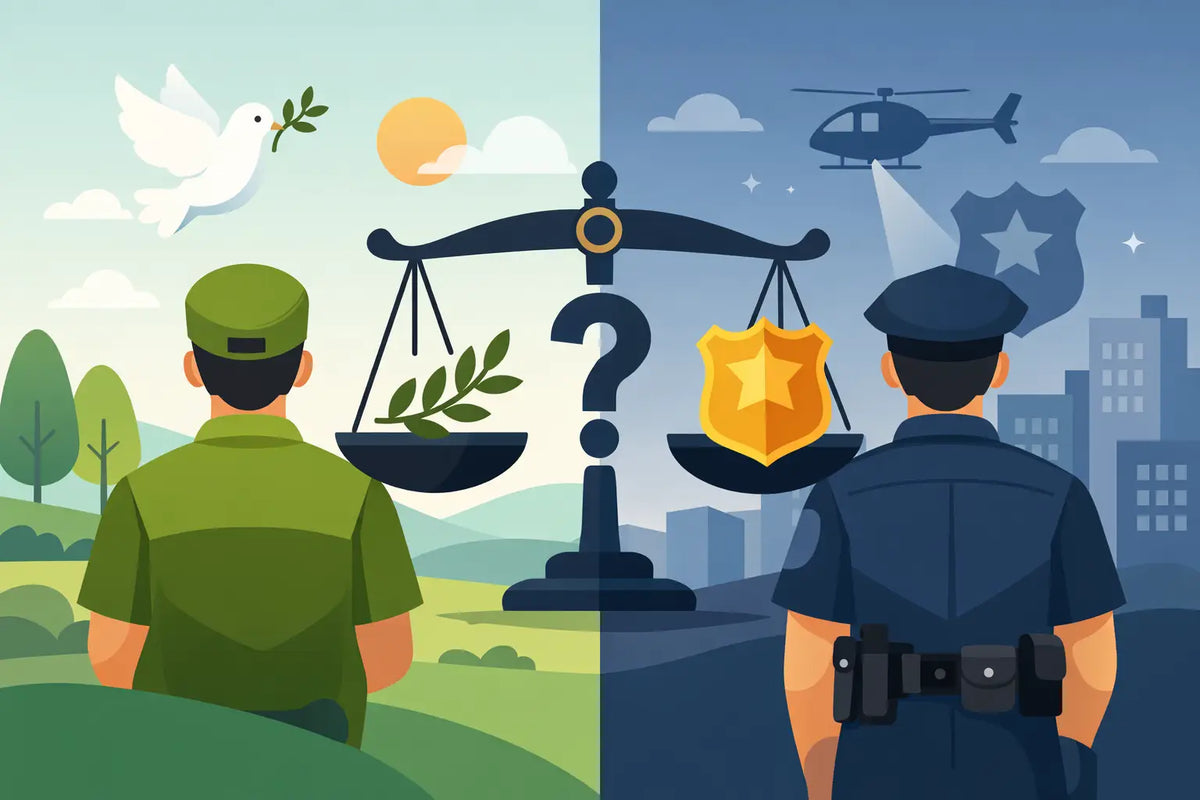
Are Peace Officers Law Enforcement?
If you’ve ever looked at a badge, a patch, or a state statute and asked, are peace officers law enforcement, the honest answer is this: usually yes, but not always in the exact same way people mean when they say “cop.” That difference matters, especially if you’re talking about authority, training, arrest powers, carrying firearms, or who falls under the broader law enforcement umbrella.
Are peace officers law enforcement in plain English?
In plain English, a peace officer is generally a government official who has legal authority to maintain public order and enforce certain laws. A law enforcement officer is a broader everyday term people use for officers who investigate crimes, make arrests, patrol, and carry out criminal law duties.
Most of the time, peace officers are part of law enforcement. But state law is where the rubber meets the road. Some states use “peace officer” as the formal legal category. Others use “law enforcement officer.” Some use both, and they do not always mean the exact same thing.
That’s why two people can both sound right while arguing about it. One is speaking in common language. The other is speaking in legal definitions.
The short answer: yes, but state law decides the details
If you want the no-BS version, here it is: many peace officers are law enforcement officers, but not every peace officer has the same powers, duties, or jurisdiction as a city police officer or county deputy.
That last part is where people get twisted around. “Peace officer” can include traditional police, sheriffs’ deputies, state troopers, game wardens, marshals, corrections officers in some jurisdictions, probation officers in some cases, and specialized investigators depending on the state. They may all sit somewhere under the law enforcement tent, but they do not all work the same mission.
So if the real question is whether peace officers are cops in the street-patrol sense, the answer is: sometimes, sometimes not.
Why the terms get used like they mean the same thing
A lot of people use “peace officer” and “law enforcement officer” as if they’re interchangeable because in everyday conversation, they often are. If someone has arrest authority, wears a badge, went through an academy, and enforces laws, most Americans are going to call that person law enforcement.
The confusion starts because legal language is built for precision, not casual conversation. A statute might name certain job titles as peace officers and then grant each one different powers. One peace officer may have full statewide arrest authority. Another may only have authority on agency property, inside a facility, or within a narrow subject matter like wildlife violations or transit rules.
That doesn’t make one role fake and the other real. It just means the badge comes with limits, and the law spells those out.
What makes someone a peace officer?
A peace officer is usually defined by statute, not vibes. The state legislature decides who falls into that category. In many states, peace officer status comes with at least some level of authority to detain, arrest, carry weapons on duty, serve warrants, or maintain public order.
But peace officer status is not one-size-fits-all. States may split authority by agency, assignment, certification, or geography. A campus officer, for example, may be a peace officer under state law with authority on university property. A fish and wildlife officer may be a peace officer with broad enforcement powers tied to conservation laws, and sometimes much more than that.
That’s why the title alone never tells the whole story. You have to look at the jurisdiction and the statute behind it.
What makes someone law enforcement?
“Law enforcement” is often the broader cultural and professional label. It usually refers to agencies and officers tasked with enforcing criminal laws and maintaining public safety. City police, county sheriffs, deputy sheriffs, state police, and federal agents all fit the common understanding.
In some states, the legal term for these people is peace officer. In other places, “law enforcement officer” is the formal legal term. Some states reserve one term for active policing roles and use the other for a wider range of public safety personnel.
So when somebody asks, are peace officers law enforcement, they’re really asking whether the legal status lines up with the public understanding. A lot of the time it does. Sometimes it only partly does.
Where the overlap is clear
The overlap is obvious with regular police officers, sheriff’s deputies, constables in some states, and state troopers. These are almost always considered both peace officers and law enforcement officers, whether people use the terms casually or formally.
They patrol, respond to calls, make arrests, investigate crimes, and enforce state and local laws. No mystery there.
The same often goes for specialized officers like school district police, transit police, railroad police in some jurisdictions, and game wardens. They may not look like the typical patrol cop to the public, but the law may still classify them as peace officers and the profession generally recognizes them as part of law enforcement.
Where it gets gray fast
The gray area shows up with corrections, probation, parole, code enforcement, court officers, reserve officers, and certain investigators. In one state, a corrections officer may be a peace officer. In another, that same role may not be considered law enforcement in the same legal sense as a patrol officer.
Probation and parole are another good example. Some officers in those systems have arrest powers, firearms authority, and statutory peace officer status. Others are more limited. Same basic profession, different legal framework.
Then there are tribal, campus, and hospital police. Some have full police powers under state or federal law. Some have authority only on certain property or under certain agreements. Again, same badge energy, different legal lane.
Why this matters beyond word games
For people inside the community, this isn’t academic nonsense. The distinction can affect hiring standards, academy requirements, retirement systems, qualified immunity questions, weapons carry, use-of-force authority, union coverage, and whether an officer can act outside a narrow jurisdiction.
It also matters in court. If a statute says only peace officers can execute a certain power, then whether somebody legally counts as a peace officer is a big deal. If a policy applies only to law enforcement officers, the exact definition matters there too.
For civilians, the difference matters when understanding what authority an officer actually has. A badge carries weight, but the law decides how much.
State-by-state reality check
There is no single nationwide answer because states write their own definitions. California, Texas, New York, Arizona, and other states all have their own legal frameworks. Some spell out long lists of who qualifies as a peace officer. Others lean more heavily on “law enforcement officer” as the controlling term.
That means an answer that is dead-on in one state can be flat wrong in another. If you’re dealing with a legal question, employment issue, certification matter, or criminal case, you need the exact state definition, not barstool logic.
This is also why internet arguments on the subject never die. People are usually pulling from whatever their own state taught them, and then acting like it’s universal.
So are peace officers law enforcement or not?
Most of the time, yes. Peace officers are generally considered part of law enforcement because they are legally authorized to preserve order and enforce laws. But the scope of that authority can be narrower, more specialized, or more limited than what people picture when they think of a regular police officer.
That means the better answer is not just yes or no. It’s yes, in many cases, but the title does not automatically tell you the full extent of the authority, training, or mission.
If you want it said straight, here it is: all squares are rectangles, but not all rectangles are squares. In a lot of states, “peace officer” is the legal bucket and “law enforcement” is the common label. In others, the relationship between the terms is tighter or looser depending on the statute.
The practical rule for regular people
If you’re speaking casually, it’s usually safe to treat peace officers as law enforcement. Most people will understand what you mean, and in many situations you’ll be right.
If you’re speaking legally, professionally, or in a hiring or courtroom setting, do not assume the terms are identical. Check the state code, agency classification, and actual powers attached to the role. That’s where the truth lives.
For a community that respects the badge, the uniform, and the job, getting the language right is more than nitpicking. It shows respect for the role, the chain of authority, and the fact that not every badge carries the same mission. Whether you wear one, worked beside one, or simply back the blue and everyone standing the line with them, the smartest move is simple: respect the title, but verify the authority.