Law Enforcement Pride Apparel That Means It
A shirt says a lot before you ever open your mouth. In this crowd, law enforcement pride apparel is not about chasing trends or throwing a badge on a cheap tee and calling it good. It is about wearing something that reflects the job, the pressure, the brotherhood, the dark humor, and the code that comes with it.
That matters because cops, deputies, corrections officers, federal agents, and the families who back them up are not buying clothes the same way the average shopper is. They are buying identity. They are buying a signal. They are buying something that tells the right people, I know what this life is, and I stand with those who wear the shield.
What law enforcement pride apparel is really for
At its best, this gear does two jobs at once. First, it shows respect for the profession. Second, it gives the wearer a way to carry that identity off duty without putting on a full billboard. Some people want bold graphics that hit hard. Others want a more low-key design that another cop spots instantly. Both are valid. It depends on where you wear it, who you are around, and how loud you want the message to be.
That is the first thing generic brands miss. Pride apparel is not one-size-fits-all. The rookie who wants a flag-and-badge design for the gym is making a different choice than the retired officer who wants something understated for weekends. A police wife, husband, or grown kid may want support-focused gear that honors service without pretending they did the job themselves. Good apparel respects those lines.
There is also a difference between pride and cosplay. Real law enforcement pride apparel feels grounded. It does not need fake operator energy or cheesy slogans that sound like they were written by someone who has never worked a shift. The strongest designs usually come from people inside the culture or close enough to understand what should be said, what should not, and what actually earns respect.
The difference between authentic and generic gear
You can spot fake tough-guy merch fast. The fit is off. The print cracks after a few washes. The message feels borrowed. Worst of all, it reads like it was built for clicks instead of built for the people wearing it.
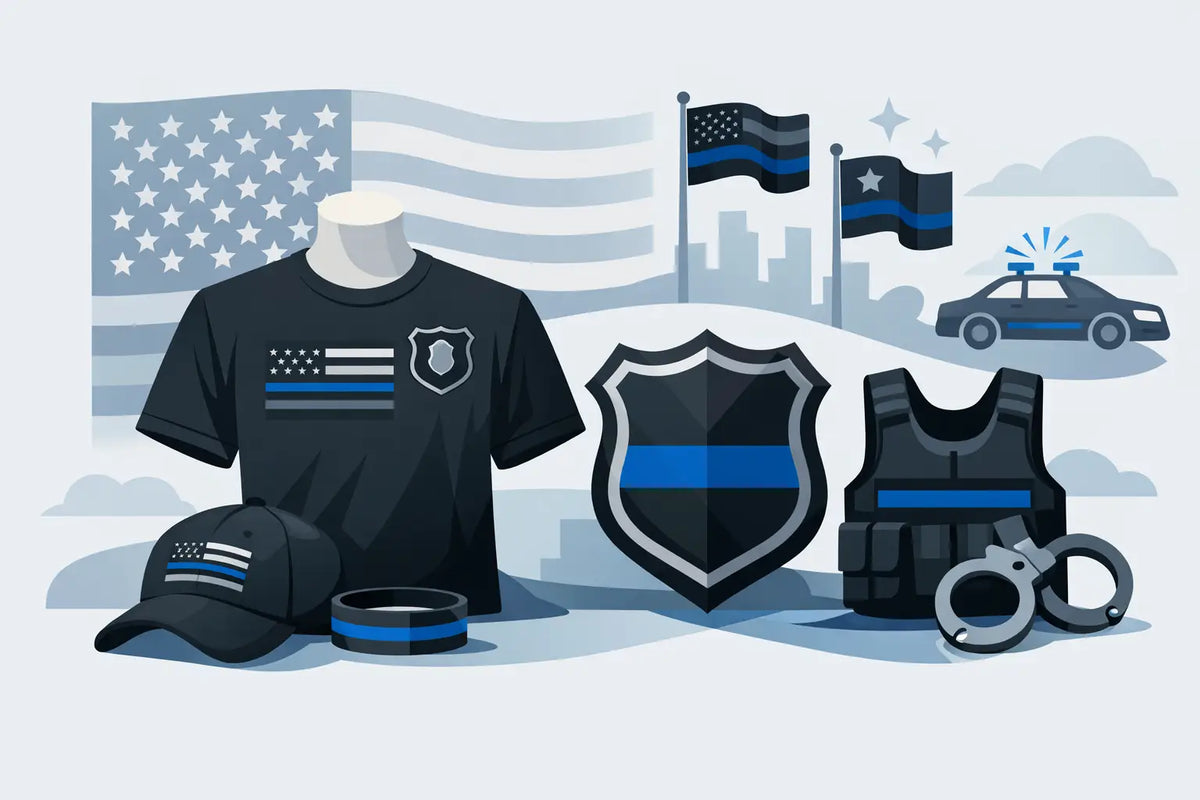
Authentic gear usually gets a few basics right. The design language is sharper. The phrases sound like they came from the community, not from a marketing meeting. The artwork respects symbols that matter - flags, unit references, thin blue line themes, K9 support, SWAT culture, memorial elements, and local pride - without turning them into a joke.
Material matters too. Nobody wants a shirt that feels like sandpaper or shrinks into a crop top after one dryer cycle. Pride apparel gets worn to the range, the gym, a backyard cookout, errands after shift, or under a flannel on a cold day. It has to hold up in real life, not just in product photos.
That is where brand credibility comes in. If a company is owned by veterans, cops, or people who actually come from this world, it usually shows. The tone is different. The designs hit harder. The trust factor is higher because the customer does not feel like they are being sold a costume.
Why people wear law enforcement pride apparel off duty
A lot of buyers are not looking for fashion in the usual sense. They want connection. They want to represent what they believe in and who they stand beside. For active or former LEOs, that can mean pride in the work and in the people who do it. For supporters, it can mean visible loyalty to a spouse, parent, child, or friend serving in the field.
There is a practical side to it too. Off-duty apparel gives people a break from uniforms while still keeping part of that identity intact. Not every officer wants to advertise the job everywhere they go, and that is fair. Sometimes subtle is smarter. But there are plenty of moments when a solid shirt, hoodie, or hat feels exactly right - charity events, gym sessions, shooting range days, family gatherings, or just regular life around people who get it.
Humor plays a role as well. Law enforcement culture has always used humor to deal with hard realities. Good apparel can tap into that without crossing into disrespect. That balance matters. Some designs should be dead serious. Some should be aggressive. Some should make the right crowd laugh immediately. If the humor feels forced or clueless, it misses the mark.
How to choose gear that actually fits the culture
Start with the message. Ask one question first: what am I trying to say when I wear this? If the answer is support, choose a design that honors service clearly. If the answer is pride in your own work, go with something that feels earned, not theatrical. If the answer is pure attitude, make sure it still looks like it belongs in the law enforcement world and not a bargain-bin fantasy section.
Then look at the build. A good design on a weak blank is still a weak product. Soft but durable cotton blends tend to win because they wear easy and hold print better. Hoodies should feel substantial without turning into armor. Hats should keep structure. If patches or bags are part of the mix, they need to be built for actual use, not just shelf appeal.
Fit matters more than some brands admit. A shirt can have the best graphic in the world and still get ignored if it hangs wrong. Athletic builds, bigger frames, and women who want a flattering cut all need options. That is one reason tribe-driven apparel brands build loyal followings - once customers find a fit that works, they come back for the next design.
It is also smart to think about where the gear will be worn. A loud graphic tee works for the gym or a weekend barbecue. A cleaner hoodie or understated hat may be the better move for daily wear. There is no single right answer. It depends on your job, your area, and your comfort level.
The best law enforcement pride apparel does not beg for attention
There is a fine line between strong and try-hard. The best pieces do not need to scream. They carry weight because the symbols mean something to the people wearing them and the people who recognize them.
That is why restraint can be just as powerful as a full-send graphic. A simple badge-inspired mark on the chest, a flag hit on the sleeve, or a clean back print with a hard message can land better than a design overloaded with every tactical cliché on earth. More ink does not always mean more impact.
The same goes for patriotism. Law enforcement culture and patriot culture overlap hard, but not every design needs to look like a fireworks show. Strong red, white, and blue themes can work. So can blacked-out prints, subdued flags, and minimal layouts that still hit with authority. The design should match the wearer, not force everybody into the same mold.
Who this apparel is really built for
It is built for officers who have earned the right to wear it. It is built for retired LEOs who still carry the identity long after the uniform comes off. It is built for dispatch, corrections, K9 handlers, tactical teams, and families who know this life is bigger than one job title.
It is also built for supporters who are careful about respect. That part matters. Backing the blue is not the same as pretending to be the blue. The best brands understand that and give supporters gear that stands strong without blurring the line.
For a brand like American Spartan Apparel, that insider credibility is the whole game. When gear comes from people who live the culture of service, patriotism, and hard-use grit, the product feels different right away. Not polished-up corporate different. Real different.
And that is the point. Law enforcement pride apparel should feel like it belongs to the people who wear it, not like it was designed for them from a safe distance. If it carries respect, holds up under real wear, and says something true about service and loyalty, it has done its job. Wear the gear that speaks plainly, stands firm, and never apologizes for who it stands with.